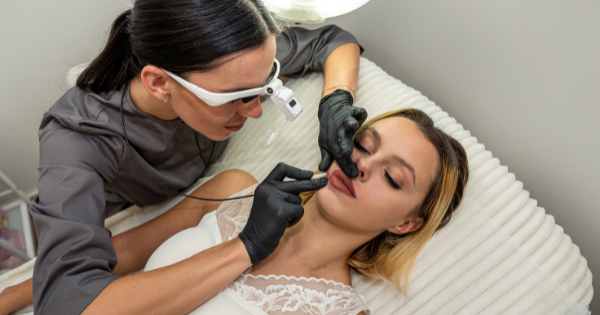
For many students in health profession programs, clinical training is the moment everything becomes real. You move from lectures and simulations to working with actual patients. Whether you’re beginning clinical rotations this spring semester or you’re just starting your degree program, now’s the time to get a student professional liability policy.
It’s not well known among students that once you begin seeing patients, you also take on professional risk. Risk exists even if you’re a student, even if you’re supervised and even if you assume your program “has you covered.”
Some schools require students to show proof of individual coverage before beginning clinicals. Others strongly recommend it, especially when students rotate through multiple sites or specialty settings. Even when not required, students are often advised to carry their own policy to simplify onboarding with hospitals, clinics and preceptors.
Understanding malpractice insurance early isn’t about expecting the worst. It’s about protecting your education, finances and future career.
Seeing patients means assuming real professional risk
Students in clinical programs, like nurse practitioners, physician assistants, nurses, physical therapists, OTs, social workers and acupuncturists routinely participate in hands-on patient care. For the first time, you’ll assess patients, document care, assist with treatment and provide services under supervision.
Supervision is required, but it doesn’t eliminate risk.
Students can still be named in malpractice claims alongside preceptors, clinical sites or institutions. Claims don’t require intentional wrongdoing or major mistakes. Allegations can stem from documentation issues, communication breakdowns, misunderstandings or unexpected patient outcomes.
If your name appears in a claim, you need protection that recognizes you as an individual, not just as part of a program.
Why program-provided coverage may not fully protect you
Most schools and clinical sites carry liability insurance, but those policies are designed primarily to protect the institution. Students are included in limited, conditional ways. Most students never see the policy language that defines what is or isn’t covered.
Program-provided coverage may:
- Apply only to approved rotations and locations
- Exclude your volunteer work or experiences outside formal requirements
- Change from site to site without clear communication
- Offer little visibility into details like policy limitations
Relying solely on program insurance can leave gaps you don’t discover until it’s too late.
What student malpractice insurance actually does
Student professional liability insurance is written specifically for your stage of training, providing coverage in your name while you participate in clinical education.
Depending on the policy, student malpractice insurance can include:
- Professional liability coverage for covered claims
- Legal defense costs related to those claims
- Coverage tailored to supervised clinical practice
This type of insurance doesn’t replace your school’s policy. It complements it by ensuring you have individual protection if questions, allegations or legal issues arise.
Just as importantly, student coverage is typically priced for a student budget.
Why this matters more than students realize
A malpractice allegation doesn’t have to result in a judgment to cause harm. Even unfounded claims can lead to stress, legal expenses and disruptions to your life and career.
More seriously, unresolved liability issues can follow you into:
- Licensing and credentialing applications
- Employment background checks
- Future malpractice insurance applications
Carrying your own coverage helps demonstrate professionalism and responsibility.
When students should consider coverage
If you’re already or soon-to-be seeing patients clinically, it’s time to consider getting your own malpractice insurance:
- Before starting clinical rotations
- When rotating through multiple sites
- If volunteering or participating in patient-facing activities
- If you’re unsure precisely what your program’s policy covers
You’re investing significant time, effort and money into your clinical education. One unexpected situation shouldn’t jeopardize that investment. Having your own malpractice insurance is a practical step toward protecting yourself.
Insurance student cheat sheet
Insurance has its own jargon. Misunderstanding or glossing over terms can cost you. The following are a few key terms to help you better evaluate your protection options.
Professional liability (malpractice insurance)
Professional liability, malpractice insurance and medmal are all the same. Regardless of what you call it, you need it while you are in practice. This policy protects you and your license if a patient or client alleges your professional actions (or failure to act) caused harm. For students, this coverage applies to patient care provided during supervised clinical training.
Named insured
Being a named insured means the policy is issued in your name, not just in the name of your school, clinical site or employer. Institutional policies are designed first to protect the organization, not the individual student.
Coverage limits
This is the maximum amount an insurance policy will pay for a covered claim. These limits are typically listed as “per claim” and “aggregate” amounts. Even as a student, limits matter because legal defense costs can add up quickly.
Occurrence vs. claims-made
These are two different policy structures that often trip up even experienced clinicians:
- Occurrence coverage applies to incidents that happen while the policy is active, even if a claim is filed later.
- Claims-made coverage generally requires the policy to be active both when the incident occurs and when the claim is filed.
Many student policies are occurrence-based, which matters because most claims occur years after the event.
Scope of coverage
This defines what activities are covered. For students, coverage should clearly apply to supervised clinical rotations or practicum experiences related to your program. Performing activities outside that scope can leave you without coverage.
Exclusions
Exclusions are situations or activities the policy does not cover. This could include work performed after graduation but before licensure or volunteer work that isn’t part of your degree program.
Frequently Asked Questions
- Do healthcare students need malpractice insurance during clinical rotations?
Yes. Once students begin seeing patients during clinical rotations, they assume professional liability risk. Even under supervision, students can be named in malpractice claims related to documentation errors, communication issues, or unexpected patient outcomes. Student malpractice insurance provides individual protection during clinical training. - Does my school’s malpractice insurance fully cover me as a student?
Not always. Program-provided malpractice insurance is designed primarily to protect the institution, not the individual student. Coverage may be limited to approved rotations, specific locations, or certain activities, and policy details are often unclear. Carrying your own student professional liability insurance helps close potential coverage gaps. - What does student professional liability insurance cover?
Student professional liability insurance typically includes malpractice coverage in your name, legal defense costs, and protection for supervised clinical practice. It complements your school’s policy by ensuring you have personal coverage if you are named in a claim, helping protect your education, finances, and future career.
Learn more about how CM&F supports students across healthcare disciplines with affordable, student-specific professional liability coverage. We protect you from day one of clinical training through every stage of your career.